
Home / Insights / How to Choose a Low-Temperature Vacuum Fryer
PILLAR GUIDE
How to Choose a Low-Temperature Vacuum Fryer
How to choose a low-temperature vacuum fryer: batch size, frying temperature, oil content, de-oiling and the controls that keep every batch crisp.
What vacuum frying does
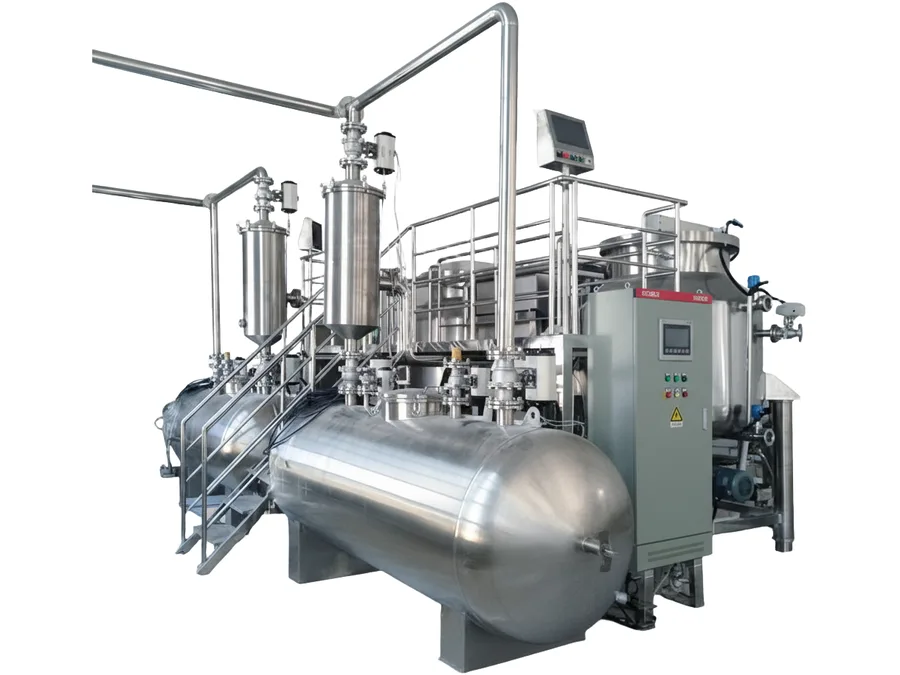
Vacuum frying fries food under vacuum at low temperature, so water leaves the product fast without the browning and oil uptake of open frying. The result is a crisp fruit or vegetable snack with low oil content — our machines hold oil content under 18% — in a colour close to the fresh product. If you sell fruit crisps, vegetable chips, or similar snacks, this is the technology that makes them.
Batch size is raw material, not finished product
Vacuum fryers are sold by raw material per batch. Our range covers three sizes:
| Model | Raw material per batch |
|---|---|
| QS-VF100 | 100 kg |
| QS-VF150 | 150 kg |
| QS-300 | 300 kg |
Finished weight is always lower than raw weight, because frying removes water. How much lower depends on the product: a water-rich fruit loses more than a dense root vegetable. Compare machines on raw material per batch, and ask the supplier what finished output they expect from your product — not from a different one.
Frying temperature: 80–100 °C, and why the range matters
Our vacuum fryers work at 80–100 °C. That range is not decoration. Different products need different points inside it: a delicate fruit slice scorches at the top of the range, while a thick root-vegetable slice fries unevenly at the bottom. The machine must hold its set temperature steadily under vacuum, batch after batch. Ask how temperature is controlled, not just what range is printed on the brochure.
Oil content is decided by the machine, not by luck
Two parts of the machine decide oil content. First, frying under vacuum at low temperature limits oil uptake during frying. Second, in-chamber centrifugal de-oiling spins the oil out of the product before the chamber opens — this step is where the difference between a greasy chip and a crisp one is made. Our machines de-oil inside the chamber and deliver oil content under 18%. Ask any supplier three questions: do you de-oil inside the chamber, is it centrifugal, and what oil content do you guarantee for my product?
The vessel, the controls, and the oil system
The frying vessel is the heart of the machine. Look for 304 stainless steel throughout and a thick-walled vessel — ours is 6 mm — because the vessel works under vacuum and heat every cycle. Controls should be a Delta PLC with an MCGS touchscreen, with a repeatable recipe for each product. Ask whether the oil filtration tank is included with the fryer or sold separately, and whether the equipment list includes a packaging machine — two questions buyers ask us most often, and two items that must be explicit on the quotation, not discovered later.
Run a sample before you decide
No brochure tells you how your product fries. Send us your raw material, or let us source it locally, and we will run a sample batch in our factory. You pay shipping only. The sample shows the real colour, the real crispness and the real oil content for your product — the three numbers that decide whether the line makes money.
Buying questions that protect you
Ask for a process flow diagram and a full equipment list. Confirm delivery time (about 3 months), warranty (12 months), payment (50% deposit, 50% before shipment) and installation terms (our engineers on site at USD 200 per person per day, travel and accommodation by the buyer). Confirm the port — FOB Shanghai — and that the quoted price is for the machine as listed, with the oil system included.
Frequently asked questions
What batch size should I start with?
Start from the raw material you can reliably supply, not from the biggest machine. A 100 kg batch running every day beats a 300 kg batch standing idle for lack of fruit. Grow by adding a second fryer or moving up a size.
Why does vacuum frying run at 80–100 °C?
Under vacuum, water boils at a lower temperature, so the product fries without the high heat that browns it and drives oil in. The exact set point inside the range depends on the product's thickness and water content.
What is in-chamber de-oiling, and why does it matter?
After frying, the basket spins inside the chamber while it is still under vacuum, throwing oil out of the product before air returns. Without it, oil soaks back in as the chamber opens. It is the main reason our oil content stays under 18%.
Is the oil filtration tank included?
Ask, and get it in writing. On our quotations the oil system is listed item by item, so there is no surprise after the order is placed. The same goes for the packaging machine — it is not always part of a frying line, so confirm whether it is included.
Can I test my product first?
Yes. We run free sample frying in our factory — you pay shipping only. Test before you buy a machine.
Supporting guides
Deeper reading from our knowledge base on this topic:
- Batch Vacuum Fryers vs Continuous Fryers
- Fresh vs Frozen Material for Vacuum Frying
- Vacuum Frying Glossary: Key Terms Explained
- Choose a Vacuum Fryer: 100/150/300KG
- Vacuum Fryer FAQ: Buying & Using Guide
- QS-VF100 / QS-VF150 / QS-300: Batch Guide
- Cleaning a Vacuum Fryer Between Batches
- Vacuum Fryer Control Panel Basics
- Vacuum Fryer Heating Options Guide
- Vacuum Fryer Installation & Operation
- Vacuum Fryer Maintenance Guide
- Vacuum Fryer Safety Controls Guide
- Vacuum Fryer Spare Parts & Wear Items
- Vacuum Fryer Troubleshooting Guide
- Vacuum Fryer Utilities: Power, Space & Water
- Vacuum Fryer Warranty & After-Sales Guide
- Vacuum Frying Pilot Trials Guide
- Vacuum Frying Temperature Guide
- What Is Vacuum Frying?